
Weight loss achieved through GLP-1 medications (such as Ozempic, Wegovy, or Mounjaro) is a transformative health milestone. However, losing a significant amount of weight quickly often leaves behind a visible reminder: stretched or sagging skin. This phenomenon, sometimes referred to as “Ozempic face” or body laxity, occurs because the skin doesn’t always have the elasticity to retract at the same pace as the body.
At Villa Sainte, we understand that your wellness journey doesn’t end on the scale; it ends when you feel comfortable and firm in your own skin. Fortunately, modern laser technology offers exceptional non-surgical solutions.
How do lasers help post-weight loss skin?
The medical-grade treatments we provide use controlled thermal energy to penetrate the deep layers of the dermis. This achieves two key goals:
-
Immediate Contraction: The heat causes existing collagen fibers to contract, instantly tightening the skin.
-
Neocollagenesis: It stimulates the long-term natural production of collagen and elastin, rebuilding the skin’s internal structure.
Considerations for “Ozempic Skin” (Sagging Skin):
- Focus on the face: Rapid facial fat loss (“Ozempic face”) may require dermal fillers (hyaluronic acid) or thread lifts to restore volume, combined with laser treatments.
- Body areas: The abdomen, arms, and thighs may require more intensive treatments, including surgical options if sagging is severe.
- Prevention: A high protein intake and strength training are recommended during weight loss to maintain muscle mass and improve elasticity.
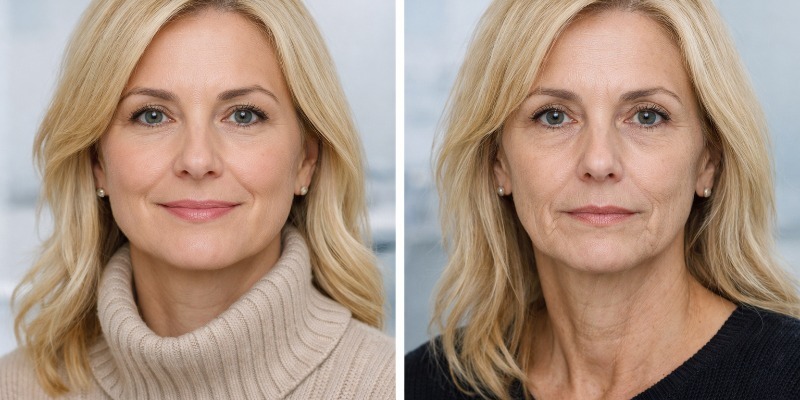
Our Recommended Treatments:
- Laser Resurfacing and Skin Tightening: Multiple technologies exist for treating post–GLP-1 skin laxity, each targeting different layers of the skin. Among these, UltraClear™ represents a highly versatile platform designed to improve skin firmness through controlled collagen remodeling.
- UltraClear® works by delivering fractional laser energy at varying dermal depths, stimulating the body’s natural repair mechanisms. Over time, this results in gradual tightening, improved elasticity, and enhanced overall skin quality. It is particularly well-suited for areas commonly affected after weight loss, including the neck, arms, and abdomen.
- Beyond tightening, this approach also refines skin texture, reduces crepiness, and improves resilience—making it an effective option for patients experiencing early to moderate laxity. Treatment protocols are fully customizable and often integrated into a broader regenerative plan to optimize outcomes.
- Biostimulatory Injectables: Rebuilding Structural Support: As skin loses both volume and collagen, restoring structural integrity becomes essential. Biostimulatory injectables such as Sculptra and hyperdiluted Radiesse work by stimulating the body’s own collagen production rather than simply adding volume.
- These treatments are particularly effective in areas prone to post-weight loss laxity, including the lower face, jawline, neck, arms, and above the knees. Over time, they help rebuild dermal thickness and improve skin quality from within, complementing energy-based treatments like laser and RF
- Skin Quality Optimization: The Missing Piece: No device or injectable alone can fully correct post–GLP-1 skin changes without addressing the underlying biologic environment. Skin is a metabolically active tissue, and its ability to regenerate depends on adequate internal support. Optimizing skin quality requires a focus on:
- Protein sufficiency, providing the necessary substrate for collagen synthesis
- Micronutrients, including vitamin C, copper, and zinc, which are essential for connective tissue formation
- Hormonal balance, particularly estrogen and testosterone, which influence skin thickness and elasticity
- Targeted peptides, such as GHK-Cu, which may support tissue repair and regeneration
This internal foundation is what ultimately determines how well the skin responds to external treatments. A Strategic, Layered Approach Post–GLP-1 skin laxity is not a single-layer problem—it involves changes in volume, collagen density, and overall tissue quality. The most effective outcomes come from combining technologies and therapies that address each of these layers simultaneously.
At Villa Sainte, treatment plans are designed to reflect this complexity—integrating laser technologies, collagen-stimulating injectables, and internal optimization strategies into a cohesive, personalized approach.
Because true skin restoration is not about chasing a single solution—it is about rebuilding structure, function, and resilience over time.