
You follow the routine. Vitamin C in the morning, retinol at night, SPF every day. You’ve tried multiple moisturizers and serums. And yet — your skin looks the same.
This is one of the most common frustrations in aesthetics: doing everything correctly and seeing minimal results. The reason isn’t your discipline — it’s physics.
Why topicals eventually plateau
The outermost layer of skin — the stratum corneum — is a barrier. Its primary job is to keep things out, including UV damage, environmental pollutants, and most of what you apply topically. Even advanced serums work at concentrations well below what’s needed to produce structural change.
Add to that: after your mid-20s, your skin’s natural cell renewal cycle slows significantly. Collagen production decreases. The result is skin that looks dull, pores that appear enlarged, and fine lines that deepen — regardless of what you apply.
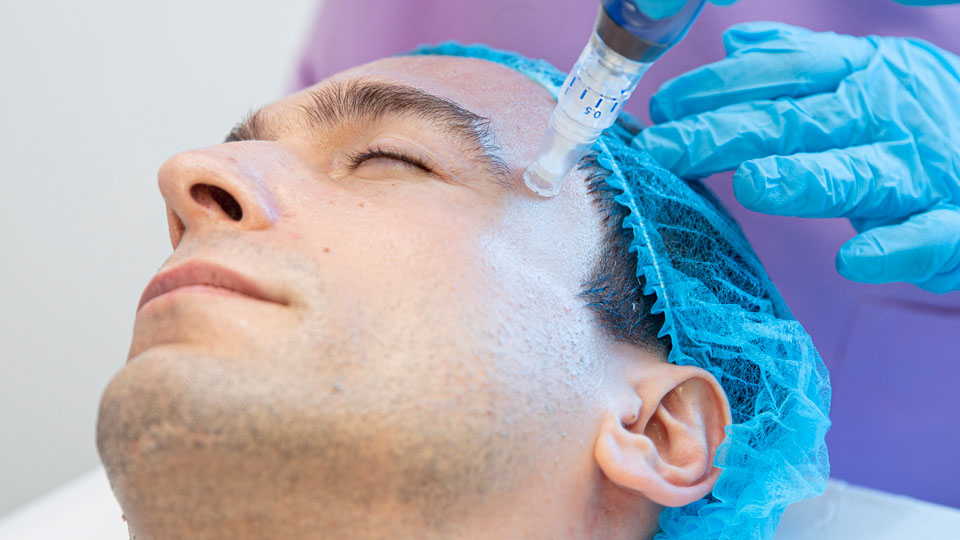
What microneedling actually does
Microneedling — clinically known as Collagen Induction Therapy (CIT) — uses a device with fine, sterile needles to create thousands of controlled micro-channels in the skin. These micro-injuries are intentional and precise, designed to trigger the skin’s own repair mechanism.
Three biological responses follow:
Collagen and elastin synthesis. The wound-healing response activates fibroblasts, which produce new collagen and elastin — the structural proteins responsible for firm, resilient skin.
Accelerated cell turnover. The repair process speeds up epidermal renewal, replacing damaged and dulled cells with healthier tissue.
Enhanced product absorption. Those micro-channels temporarily increase the penetration of serums and growth factors dramatically — allowing active ingredients to reach layers they’d never access on their own.
Who benefits most
Microneedling is one of the most versatile treatments in medical aesthetics. It’s especially effective for:
- Fine lines and early wrinkles
- Acne scars (rolling and boxcar types)
- Enlarged or congested pores
- Uneven skin texture and tone
- Dull or lackluster skin
- Mild skin laxity
It works safely across most skin types and tones — including melanin-rich skin where some laser technologies require more caution.
What to expect from treatment
Most patients undergo a series of 3–6 sessions spaced 4–6 weeks apart. Results are progressive: collagen remodeling continues for weeks after each session, meaning improvement builds between visits.
Downtime is typically mild — redness for 24–48 hours, similar in appearance to a moderate sunburn. Your provider will prescribe a post-treatment protocol to protect and accelerate healing.
The clinical difference
At-home dermarollers exist. But the depth, precision, sterility, and the serums used in a clinical setting produce results that can’t be replicated at home. The provider’s judgment in selecting needle depth, pass count, and post-treatment protocol is where the real difference lives.