
Dull skin. Uneven tone. Stubborn dark spots that no cream quite fades. A texture that feels rough no matter how much you exfoliate.
These aren’t signs of a skincare gap. They’re signs of a biological process that has slowed — and that topical products alone can’t fully reverse.
Your skin’s renewal cycle — and what disrupts it
Healthy skin renews itself roughly every 28–40 days. New cells form in the deeper layers, migrate upward, and eventually shed from the surface. In your teens and early twenties, this happens efficiently and consistently.
By your 30s and beyond, the cycle slows. Sun exposure, hormonal shifts, stress, and environmental factors further disrupt it. The result: a buildup of dead, dysfunctional cells on the surface that makes skin appear flat, discolored, and rough — even when healthier skin is forming beneath it.
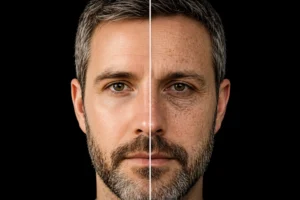
What chemical peels actually do
A chemical peel is a controlled exfoliation treatment that uses specific acids to dissolve the bonds holding dead skin cells together, accelerating their removal and signaling the skin to replace them with fresher, more functional tissue.
Depending on the type and depth of peel, the effects include:
- Removal of the dull surface layer, revealing cleaner, brighter skin beneath
- Normalization of uneven pigmentation, including post-acne dark marks and sun spots
- Reduction of active acne through sebum regulation and bacterial reduction (salicylic acid-based peels)
- Improvement in skin texture by resurfacing the epidermis
- Stimulation of collagen production with medium and deeper peel types
The most commonly used acids include glycolic acid (AHA), lactic acid (AHA), salicylic acid (BHA), mandelic acid, and trichloroacetic acid (TCA). Each has a different target depth and skin type suitability.
Why at-home exfoliation isn’t the same
At-home exfoliants work at low concentrations for consumer safety. Clinical peels use higher concentrations, calibrated pH, and controlled contact times that produce results impossible to replicate at home.
More importantly: the provider selects the peel type and depth based on your specific skin, condition, and history. That personalization is where the real advantage lies.
Who benefits most
Chemical peels are one of the most flexible treatments in medical aesthetics, particularly effective for:
- Post-acne hyperpigmentation (PIH)
- Sun damage and uneven skin tone
- Melasma (in combination with other protocols)
- Dull, congested, or textured skin
- Mild to moderate active acne
- Superficial fine lines and rough texture
What to expect
Superficial peels typically involve no meaningful downtime — mild redness for 24–48 hours. Medium peels may involve 3–7 days of visible peeling and redness. Your provider will select depth and acid type based on your skin and lifestyle.
Results are visible after the first session and build progressively with a series. Many patients incorporate maintenance peels seasonally to sustain clarity and brightness.